Monkey Mia Dolphin Feeding On A Coral Coast Trip
Monkey Mia is the one place on the Coral Coast where wild dolphins come close to shore under ranger supervision, and the experience is free of visitor feeding, fixed times and guarantees. Here is exactly how it works, what it costs and which multi-day tours build a stop around it.
Short answer
Rangers at Monkey Mia feed the wild dolphins up to three times a day, and visits happen more frequently in the early morning. Visitors watch from the beach, never touch or feed the dolphins, and pay a separate per-person entry fee of AU$15 for adults that other park passes do not cover.
The dolphin experience at Monkey Mia, inside the Shark Bay World Heritage Area, is one of the most closely managed wildlife encounters in Australia. A small group of wild Indo-Pacific bottlenose dolphins visits the beach, and rangers employed by the Department of Biodiversity, Conservation and Attractions (DBCA) feed them small amounts of fish under a strict protocol. Visitors do not feed anything, do not touch anything, and do not get a guaranteed show at a guaranteed hour. What they get is a rare, regulated chance to stand metres from wild animals in clear shallow water.
That restraint is the whole point. The program exists because the dolphins choose to come, and the rules exist so they keep choosing to. Here is how the feedings work, what the experience costs, the rules every visitor agrees to by standing on that beach, and the multi-day tours from Perth that put Monkey Mia on the itinerary between the Pinnacles and Ningaloo Reef.
How Does Monkey Mia Dolphin Feeding Actually Work?
The dolphin experience at Monkey Mia is a ranger-run program in which wild dolphins that choose to visit the beach are offered small amounts of fish, up to three feeds a day, with visits more frequent in the early morning. There is no fixed schedule, no booking slot for the feeding itself, and no promise that the dolphins will appear, because the official program depends entirely on whether and when the dolphins come.
The detail that surprises most first-time visitors is that the feeding is deliberately small. Rangers offer the dolphins only a limited quantity of fish, a fraction of what an adult dolphin eats in a day, so the animals stay wild and keep hunting for themselves. The feeding is a supplement that keeps the visit routine going, not a diet. That is why the experience can never be a performance: the dolphins arrive on their own terms, sometimes for one feed, sometimes for several, sometimes not at all on a given morning.
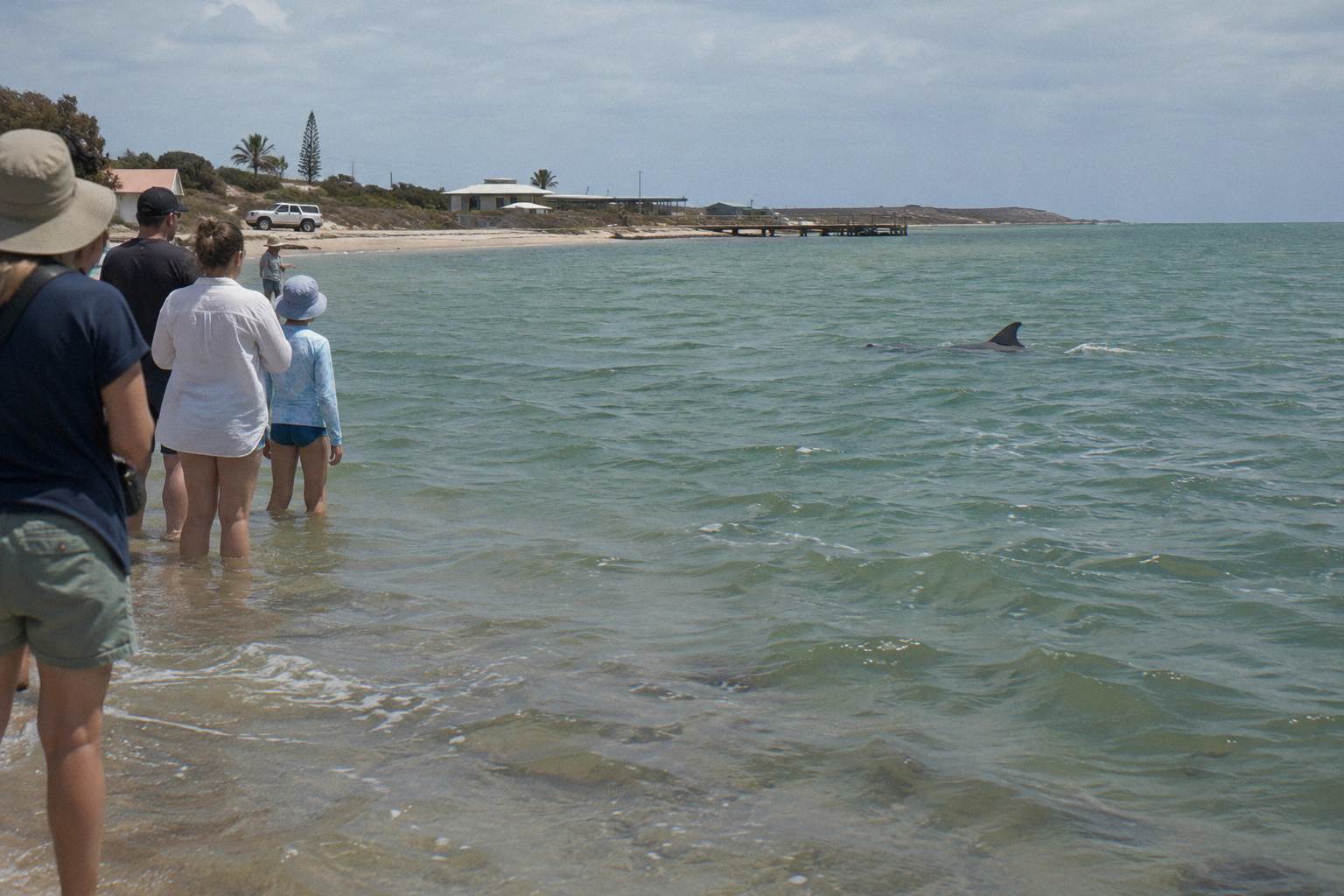
Timing matters more than anything else you can control. The official page for the experience notes that dolphins visit the beach more frequently in the early morning, when the fish are offered, and rangers feed up to three times daily. Anyone planning a day around Monkey Mia should aim to be on the beach early and to have a flexible rest of the day, because the dolphins do not read timetables. People who arrive at midday expecting a scheduled show are the people most often disappointed.
The other thing to understand is the standing arrangement between the animals and the park. These are not captive dolphins and not trained dolphins. They are wild animals that have interacted with this stretch of water across generations, under a management program run by DBCA. The experience you have is a window into that program, guided by rangers who explain what is happening as it happens, and who can call off a feed if the dolphins' behaviour or welfare requires it. You can read the official description on the DBCA dolphin experience page.
What Are The Rules At The Monkey Mia Dolphin Experience?
Visitors must never touch or approach the dolphins and must never feed them, no boating is allowed in the dolphin interaction area, and a five-knot speed zone applies 200 metres either side of the jetty extending 300 metres offshore. Only rangers feed the dolphins, and every visitor standing on the beach is expected to follow ranger instructions without exception.
The rules are short, absolute and enforced. The two simplest ones carry the most weight: never touch or approach the dolphins, and never feed them. Touching changes how wild dolphins behave around people, and feeding them anything other than the rangers' carefully measured fish teaches them to associate people with food, which is dangerous for both sides. A dolphin that learns to approach boats for handouts becomes a dolphin at risk of propeller injury, so the park treats visitor feeding as a serious offence rather than a friendly gesture.
The water rules matter just as much. No boating is allowed inside the dolphin interaction area at all, and outside it a five-knot speed zone runs 200 metres either side of the jetty and extends 300 metres offshore. If you are staying nearby and have a kayak or a boat, that zone is not advisory. It exists so the dolphins can move in and out of the bay without dodging hulls. The full wording is on the official dolphin experience page, and it is worth reading before you arrive rather than after a ranger has spoken to you.
| Rule | What It Means For You |
|---|---|
| Never touch or approach the dolphins | Stay where rangers indicate; let the dolphins decide the distance |
| Do not feed the dolphins | All feeding is done by rangers, up to three times daily |
| No boating in the interaction area | Keep all craft outside the marked zone near the jetty |
| Five-knot speed zone | Applies 200 m either side of the jetty, 300 m offshore |
| Follow ranger instructions | Rangers manage each visit as it happens |
One question comes up on every beach morning: can children take part? The experience is a beach event, and families stand together in the shallows behind the rangers' line, but nobody, child or adult, is selected to hand over fish. That was true of older programs elsewhere in the world and is not how Monkey Mia operates. The dolphins are fed by staff, visitors are the audience, and the beach is the theatre. It keeps the encounter honest and the dolphins wild.
What Does It Cost To Enter Monkey Mia?
Monkey Mia Conservation Park charges its own per-person entry that is not covered by park passes or entry fees paid at other parks: a 24-hour day permit costs AU$15 per adult, AU$10 concession, AU$5 for children aged 6 to 15 and AU$35 for a family of two adults and two children, with under-6s free. A 28-day month pass costs more.
This is the fee fact that catches out the most people on a Coral Coast road trip. Standard WA park entry, the AU$17-per-vehicle charge you pay at places like Cape Range, does not apply at Monkey Mia, and neither do the Holiday Pass or the Annual All Parks Pass. Monkey Mia Conservation Park runs its own schedule, charged per person rather than per vehicle, and the official pages are explicit that passes and entry bought elsewhere are not valid there. If your trip budget was built around a single park pass covering everything, this is the exception. The figures come from the DBCA attraction-fees page and the Monkey Mia park page.
| Permit | Adult | Concession | Child 6 To 15 | Family (2 + 2) |
|---|---|---|---|---|
| Day permit (valid 24 hours) | AU$15 | AU$10 | AU$5 | AU$35 |
| Month pass (valid 28 days) | AU$25 | AU$20 | AU$10 | AU$60 |
Children under 6 enter free. For a couple staying one night and catching one or two beach mornings, the day permit is the obvious choice, bought once and valid for 24 hours. For families spending several days in Shark Bay, the month pass can make sense once two visits are on the cards, and the family rate softens the per-person arithmetic further. Which one suits you depends entirely on how long you plan to linger, and the choice is the same one the fee table forces at every self-guided stop on the coast.
A short walk from the fee point, the Shark Bay Marine Park that wraps around Monkey Mia has no park entry fee of its own, as stated on the Shark Bay Marine Park page. It forms part of the Shark Bay World Heritage Area, listed for its stromatolites, seagrass meadows and marine life rather than for the dolphins alone, so the entry fee at Monkey Mia is buying access to one managed site inside a much larger protected landscape worth a day of anybody's time.
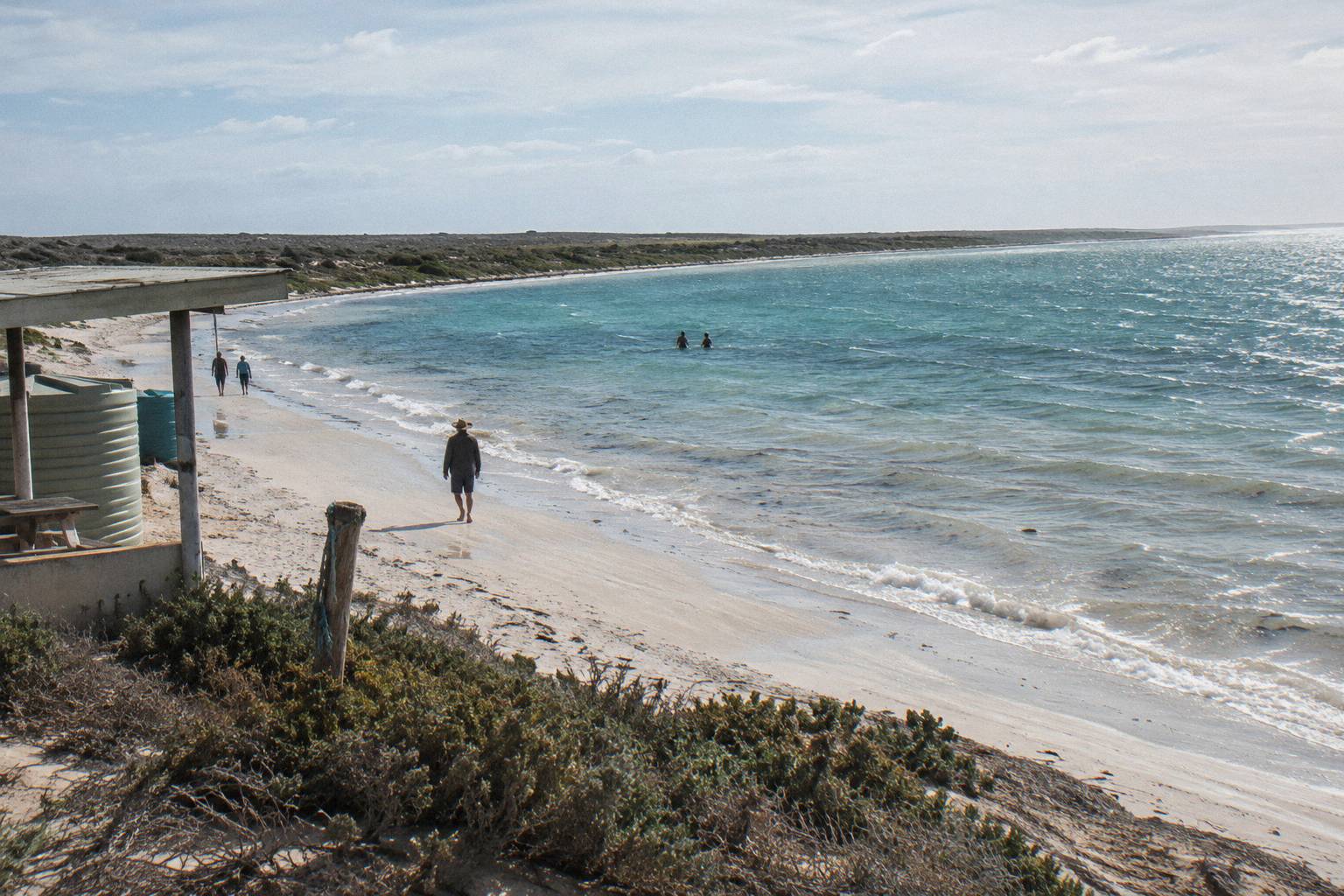
When Is The Best Time Of Day To See The Dolphins At Monkey Mia?
Dolphins visit the Monkey Mia beach more frequently in the early morning, when rangers offer the fish, and feeds happen up to three times a day, so the practical answer is to be on the beach early and stay flexible, because the official program prints no fixed times and makes no promise the dolphins will come at all.
The early-morning pattern is the only timing guidance the park gives, and it is worth taking seriously. The fish are offered at the start of the day, and the dolphins that participate in the program tend to visit around those offers. Later feeds can and do happen, but a visitor who sleeps in and arrives after lunch has missed the window the park itself identifies as the most productive. If you are staying in Denham or at the Monkey Mia resort precinct, the beach is close enough that an early start costs you nothing but the alarm.
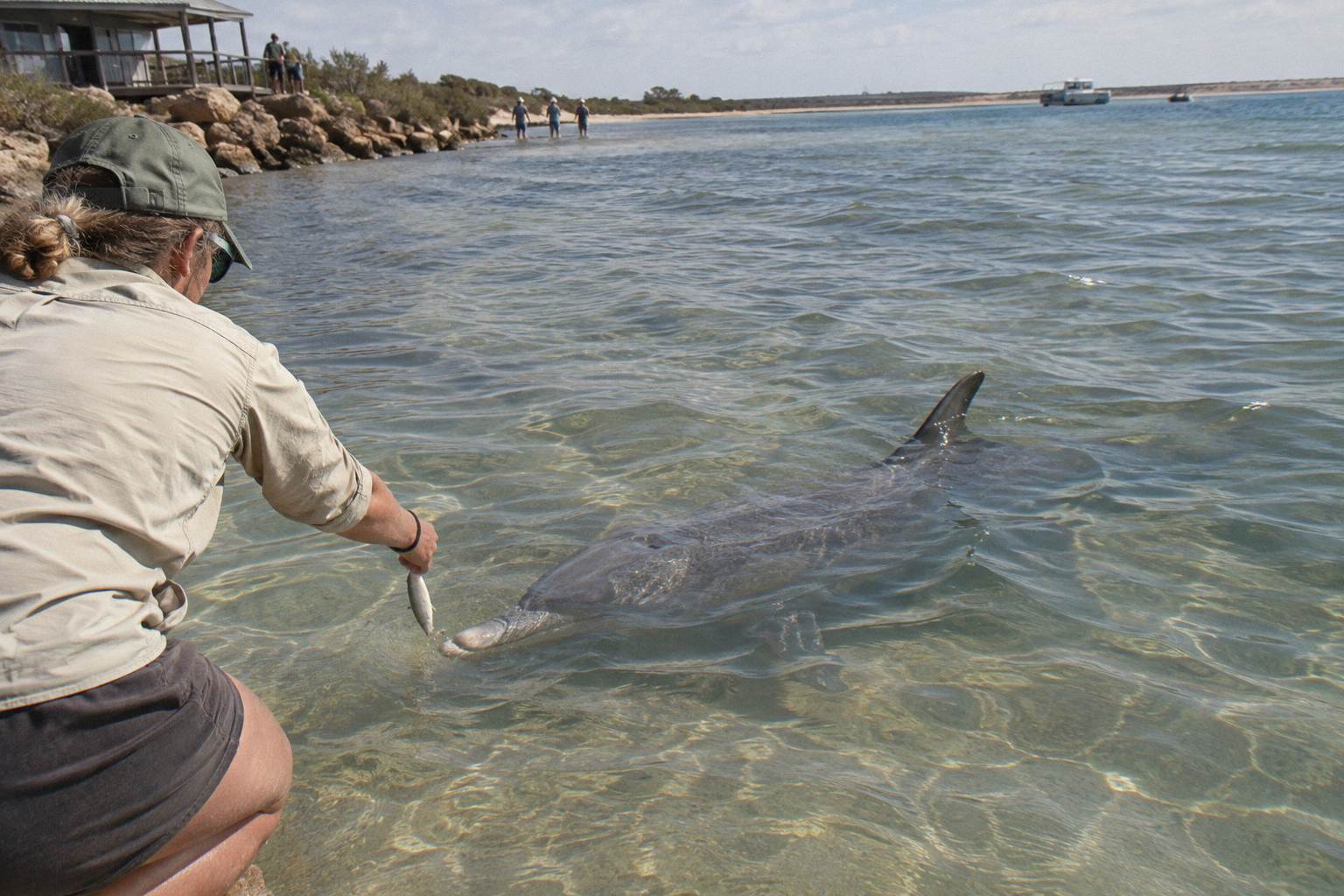
The second half of the answer is patience. Because times depend on if and when the dolphins visit, there is no board at the gate with a feeding schedule, and no ranger will tell you a dolphin will be there at 8:04. Some mornings bring several visits, some bring one, and the honest framing is that every visit is a bonus rather than a purchased product. People who treat the beach as a place to spend a slow morning, with a coffee and a book between checks, consistently get more out of it than people who budget fifteen minutes and move on.
For tour passengers this timing question is handled by the itinerary rather than by you. A multi-day tour that overnights near Monkey Mia can put you on the beach for the morning window without any effort on your part, which is one of the quiet advantages of a guided route over a long self-drive day that has to push on for fuel and distance. Whether a given tour overnights at Monkey Mia or passes through at a set hour depends on the itinerary, so confirm the itinerary details when you book if the dolphin morning is the reason you are going.
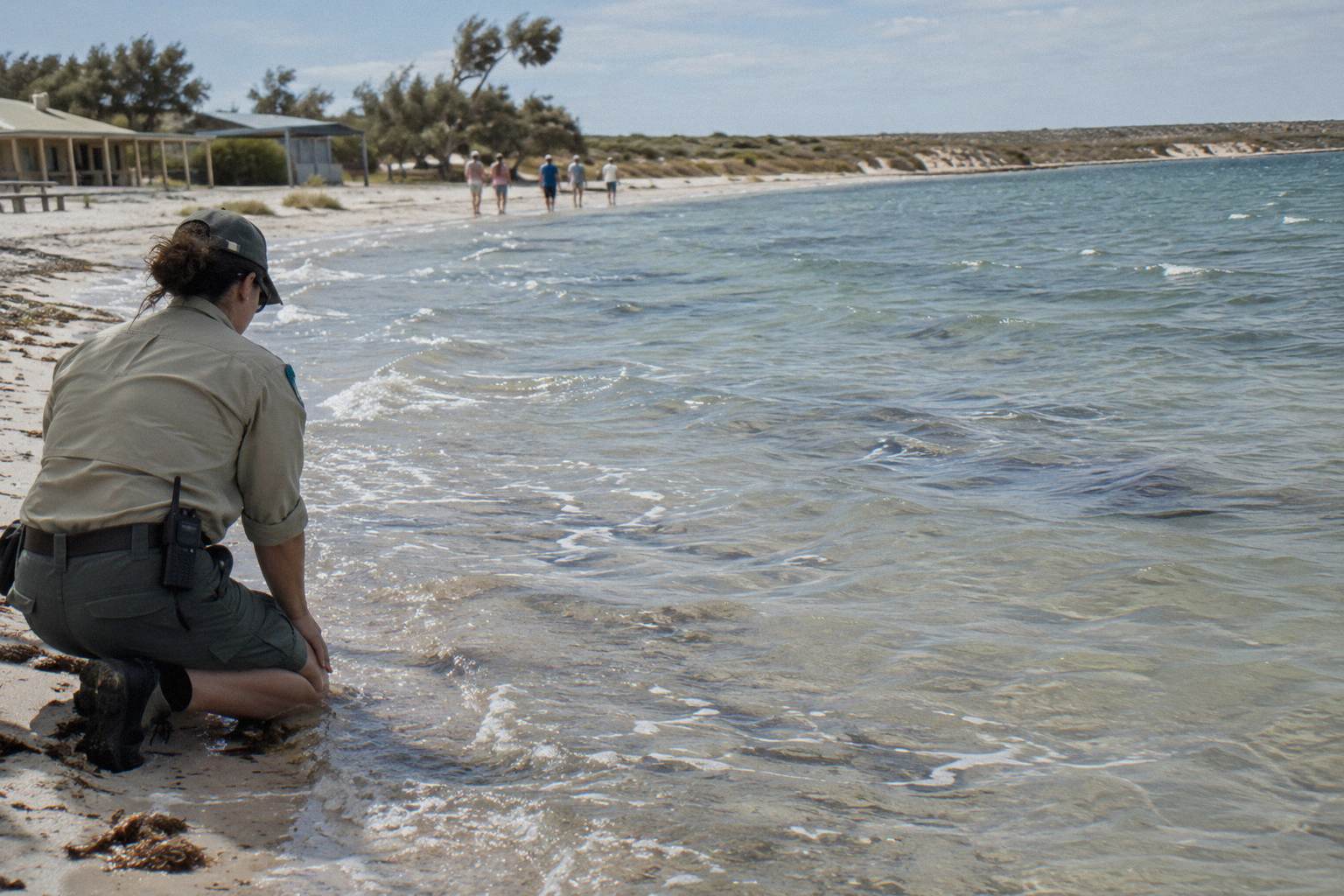
Which Guided Trips From Perth To Exmouth Stop At Monkey Mia?
Six of the multi-day tours on this route name Shark Bay or Monkey Mia among their stops, ranging from the 6-day one-way options from US$1,120 and US$1,326 per person to a 7-day return loop from US$1,385, plus longer routes that add Kalbarri or Karijini, so the dolphin experience pairs naturally with a full Perth-to-Exmouth itinerary rather than requiring a separate detour.
The shortest-priced option that names Monkey Mia is the 6-day Perth to Exmouth with Monkey Mia from US$1,120 per person, which runs Pinnacles, Kalbarri, Shark Bay and Monkey Mia, Coral Bay and Exmouth with Ningaloo. The 6-day one-way Coral Coaster follows the same coast from US$1,326 per person and carries a rating of 4.8 across 55 reviews. On the return-loop side, the 7-day Exmouth Explorer covers Pinnacles, Kalbarri, Monkey Mia, Coral Bay and Ningaloo before returning to Perth, from US$1,385 per person, rated 4.9 across 345 reviews. If seeing the dolphins matters to you, any of these itineraries puts a Shark Bay stop in the middle of the drive.
| Tour | Direction | Days | From Price (Per Person) | Rating |
|---|---|---|---|---|
| 6-day Perth to Exmouth with Monkey Mia | One way to Exmouth | 6 | From US$1,120 | No rating shown |
| 6-day one-way Coral Coaster | One way to Exmouth | 6 | From US$1,326 | 4.8 from 55 reviews |
| 7-day Exmouth Explorer | Return loop to Perth | 7 | From US$1,385 | 4.9 from 345 reviews |
| 7-day Perth to Exmouth and return with Monkey Mia | Return loop to Perth | 7 | From US$1,256 | No rating shown |
| 7-day Kalbarri coastal adventure | Return loop to Perth | 7 | From US$1,205 | No rating shown |
| 8-day small-group boutique tour | One way to Exmouth | 8 | From US$2,899 | No rating shown |
The ratings deserve a careful reading. Only two tours on the whole route carry the rating shown, and both are in the table above, so a missing rating means exactly that and nothing more. The 8-day small-group boutique tour is the premium option in the list, from US$2,899 per person, taking in Hutt Lagoon along with the Pinnacles, Kalbarri, Monkey Mia, Coral Bay and Ningaloo stops. Its fare covers 7 nights' boutique hotel or resort accommodation with ensuite, 7 breakfasts and all transport, while park entry and the Monkey Mia permit itself should be confirmed when booking before comparing prices.
There are also wider nets. The 10-day Perth to Broome via Ningaloo and Karijini names Monkey Mia alongside Pinnacles, Kalbarri, Coral Bay, Exmouth, Karijini and Broome, from US$1,958 per person, and it is a new listing, so no rating exists yet. For travellers whose trip does not end in Exmouth, that longer arc keeps the dolphin morning and adds the Pilbara gorges. The 10-day Perth to Exmouth, Karijini and return keeps Shark Bay as well, naming Monkey Mia and Hamelin Pool alongside Exmouth, Ningaloo and Karijini.
“A fantastic trip along the coast of WA. Sure there is a lot of driving but there are great rewards a Long the Way. Day 4 and 5 on the sea is amazing. There were great coral Fish, Sharks, Mantareys, turtles and whaleshark. Lots of big memories for life. A great Way to travel and with good community and in parts of WA that are really special.”
How Does The Dolphin Experience Fit Into A Shark Bay Stop?
Monkey Mia sits inside the Shark Bay World Heritage Area on the Peron Peninsula, roughly a half-day excursion from the region's other drawcards, and most visitors pair one or two early beach mornings with the marine park's wider shoreline, entry to which carries no park entry fee, making a single overnight the smallest sensible stop.
The geography rewards slowing down. Shark Bay is a huge, shallow, World Heritage-listed embayment, and Monkey Mia sits out on the peninsula that defines its eastern shore. The dolphins are the headline, but the surrounding marine park, with its seagrass meadows and protected shoreline, is the reason the whole area holds World Heritage status. A visitor who arrives in the afternoon, catches the next morning's beach window, and leaves the following midday has given the place the minimum it deserves, and even that modest plan beats a lunchtime drive-through that gambles everything on the dolphins appearing in a half-hour window.
For the practical side of reaching the region and what a stop involves, the planning pages on this site go deeper: see how to get from Perth to Shark Bay, the Monkey Mia tour options from Perth, and the broader Shark Bay tour guide. Those pages cover the route and the region; the dolphin rules and fees on the present page are the part that changes least and surprises most.
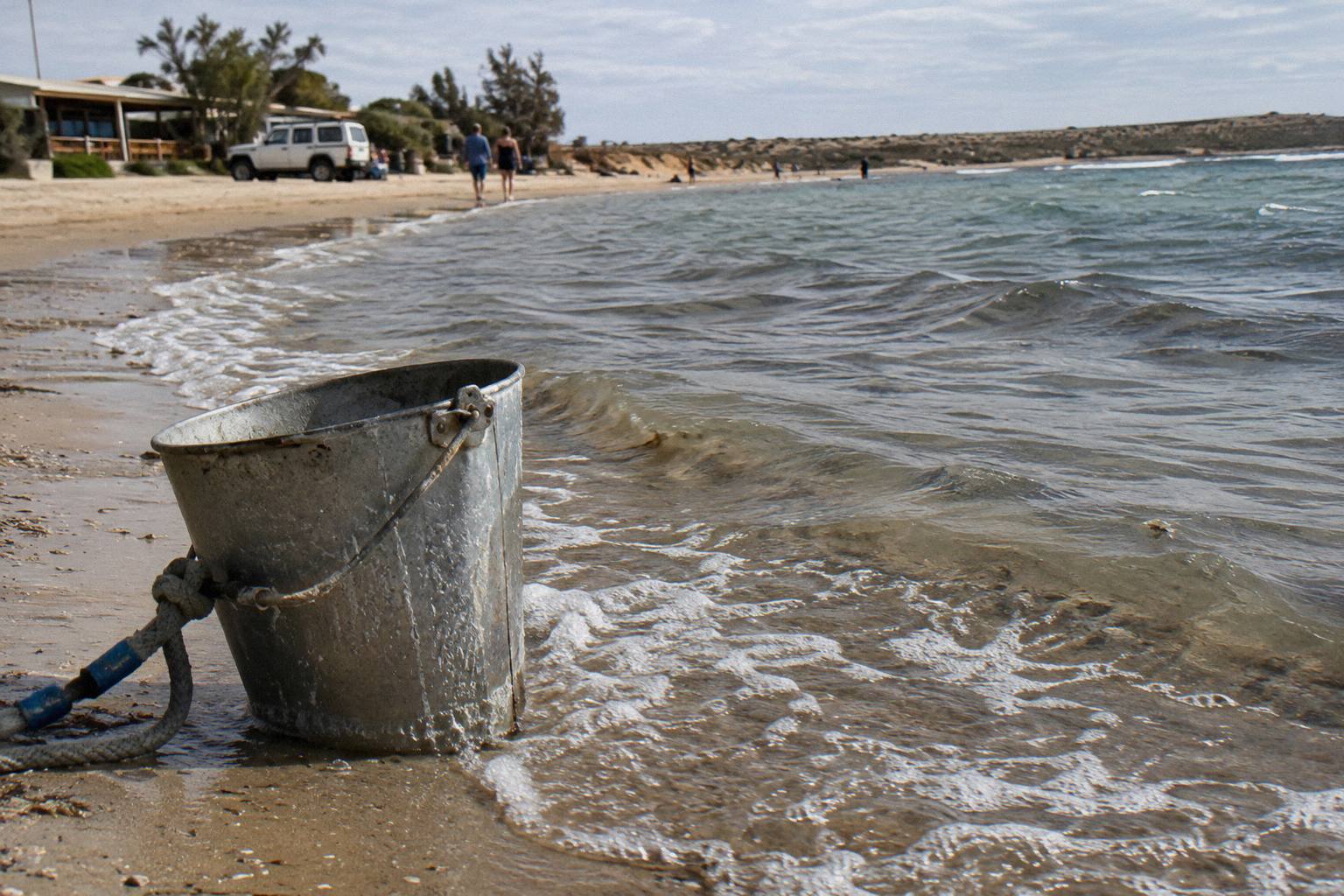
If you are travelling independently rather than on a tour, the fee structure from earlier is the thing to plan around. Budget the per-person Monkey Mia permit separately from any WA park pass you hold, arrive the evening before, and give yourself at least one full morning. On a guided tour, the operator handles the schedule and the group arrives together, but the fee question is still worth checking, because tour inclusions differ and the permit is a real out-of-pocket cost for a family if it is not covered, so confirm when booking whether your fare includes it.
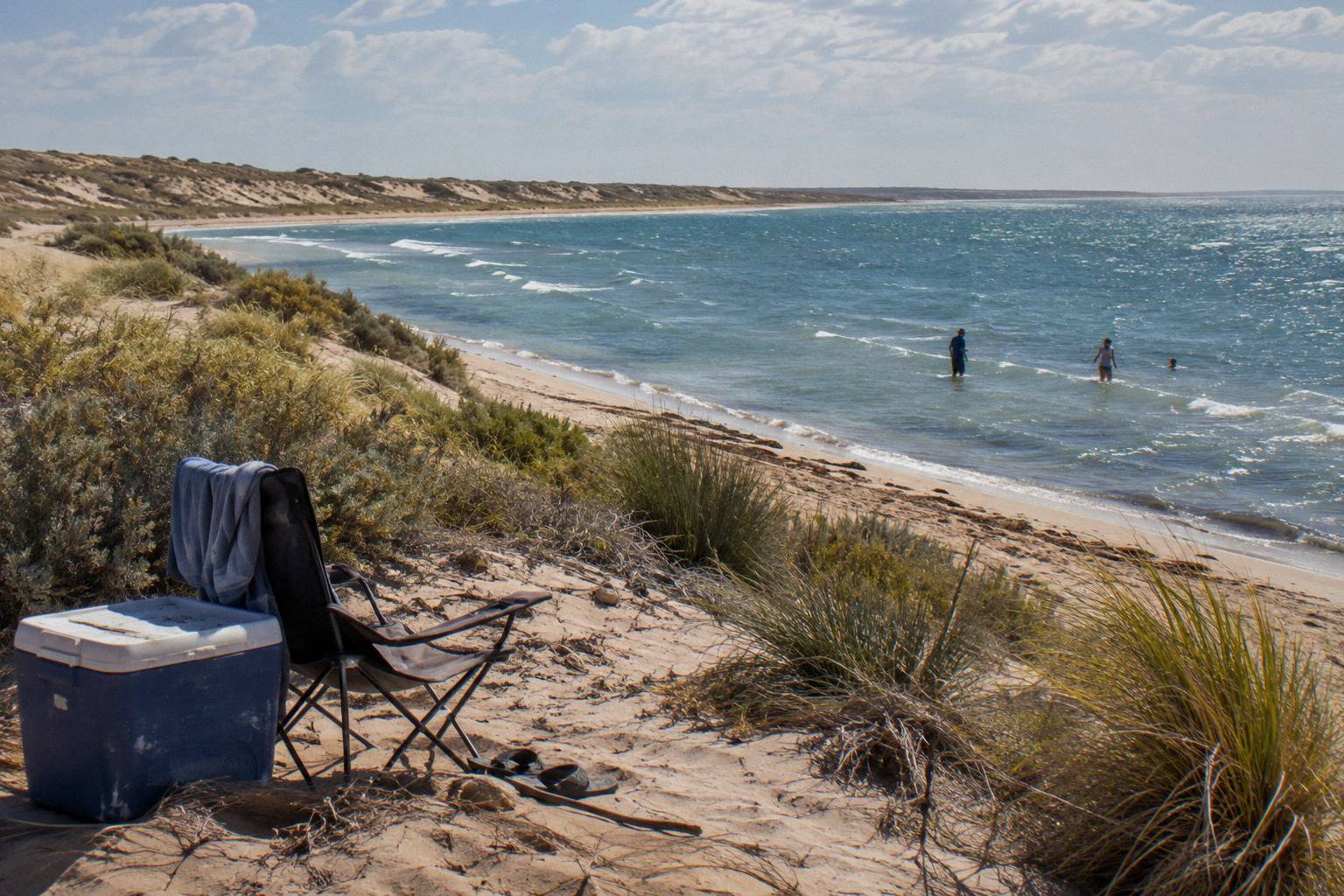
Is The Monkey Mia Dolphin Experience Ethical?
By the standards of the managing agency, yes: the program is run by DBCA rangers, the feed is deliberately small so the dolphins remain wild and self-foraging, touching, feeding and approaching are banned, and the experience is structured around the dolphins' choice to visit, which is why no sighting or interaction is ever promised.
The ethical critique of dolphin attractions usually centres on three things: captivity, food dependency and unregulated contact. Monkey Mia answers all three structurally rather than rhetorically. The dolphins are free to leave and free not to come, and on any given day some do exactly that. The feed is a small supplement, not a diet, so the animals continue to hunt wild fish for the bulk of their intake. And contact is prohibited outright, with rangers controlling every step of each interaction and the five-knot and no-boating zones keeping the water around the experience calm.
The management is not self-declared. DBCA, the state agency responsible for Western Australia's parks and wildlife, runs the program and publishes the rules on its own pages, and the Shark Bay World Heritage listing gives the region an international layer of scrutiny. None of that makes the program above question, and wildlife advocates debate any feeding of wild animals, but the debate at Monkey Mia is about a tightly regulated ranger program, not about a theme-park encounter. Visitors who read the rules before arriving tend to find the reality matches the description.
What the ethics ask of you as a visitor is simple compliance. Do not reach out when a dolphin passes close, even though the urge is physical. Do not bring food to the beach. Keep drones, boats and speed out of the zone. Give the rangers room to work. Every one of those behaviours protects the thing you came to see, and the program's longevity depends on millions of individual visitors each choosing the boring option over the exciting one.
Common Mistakes When Planning A Monkey Mia Dolphin Visit
The mistakes that cost people the experience are arriving late in the day, expecting a fixed feeding time, assuming a WA park pass covers entry, trying to touch or feed the dolphins, and budgeting the stop as a one-hour photo opportunity rather than an overnight early-morning event, and every one of them is avoidable with a small amount of planning.
The timing mistakes are the biggest. Arriving at noon means missing the early-morning window the park itself identifies as when visits are more frequent, and expecting a printed schedule means frustration, because the official position is that times depend on if and when the dolphins visit the beach. The cure for both is the same: go early, stay flexible, and treat any dolphin appearance as a fortunate event rather than a purchased one.
The fee mistakes come next. Paying AU$17 at another park and assuming it carries into Monkey Mia does not work, because Monkey Mia Conservation Park has its own per-person schedule and explicitly excludes passes bought elsewhere. And the interaction mistakes, touching, feeding, boating into the zone, are not just discourteous, they undermine the management program and can bring an official response. Here is the short list of failure points and their fixes.
| Mistake | Why It Fails | What To Do Instead |
|---|---|---|
| Arriving mid-afternoon | Visits are more frequent in the early morning | Overnight nearby and be on the beach early |
| Expecting a fixed feeding time | No schedule exists; visits depend on the dolphins | Plan a flexible morning, not a slot |
| Assuming a park pass covers entry | Monkey Mia has its own per-person fees | Budget AU$15 per adult day permit |
| Trying to touch or feed a dolphin | Banned outright; rangers do all feeding | Watch from the ranger's line |
| Boating near the jetty | Interaction area is closed to boats; 5-knot zone | Keep craft outside the marked limits |
| Treating it as a one-hour stop | The window is the whole morning | Give the stop a full morning plus travel |
The final mistake is comparative: skipping Monkey Mia because a tour itinerary does not name it. Several of the strongest routes on the coast do include it, and if the dolphin morning is the centrepiece of your trip, choose the itinerary first and the price second. The 6-day Perth to Exmouth with Monkey Mia exists precisely for that priority, and pairing the dolphin stop with Ningaloo on a single booking keeps the coast's two signature wildlife experiences on one ticket. For the broader decision between one-way and return itineraries, the one-way tour guide lays out the trade-offs, and the planner behind Perth To Exmouth Tour covers the full route.
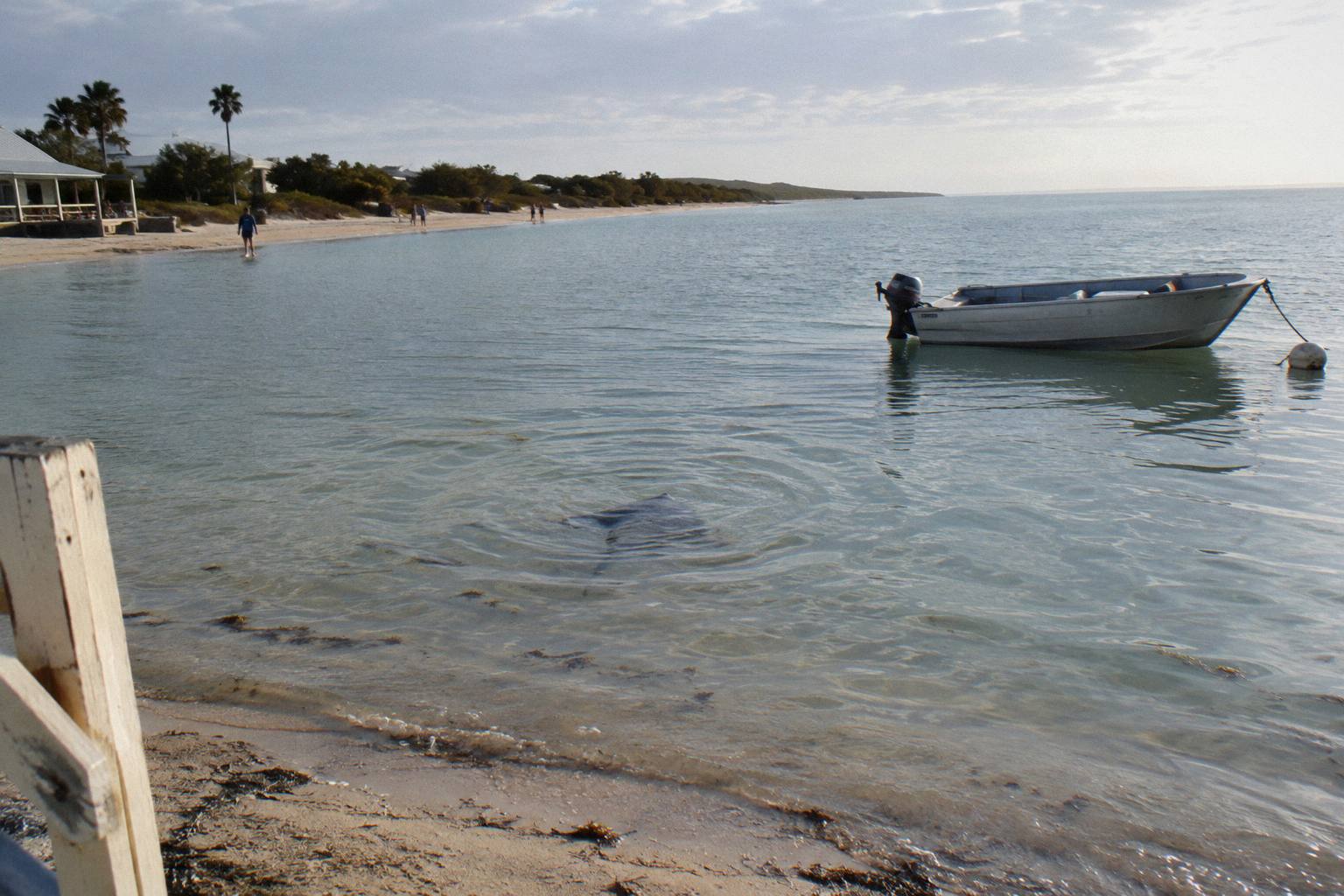
What To Expect From A Dolphin Morning At Monkey Mia
A typical dolphin morning means standing in a small crowd at the water's edge while rangers explain the program, waiting through quiet stretches, and, if the dolphins choose to visit, watching them feed metres away for a few unhurried minutes, an experience that is free of charge once you hold a valid permit and that ends when the animals leave on their own terms.
The rhythm of the morning is slower and more communal than most people picture. The beach is not a stadium, the crowd is a loose arc of visitors in bathers and dry clothes, and the rangers spend as much time interpreting as feeding, explaining which dolphin is which, how the program started and why the rules read the way they do. When a dolphin comes in, the actual feed is brief, a few fish passed at the water's edge, and then the animal turns and goes. The value is in the proximity and the context, not in duration.
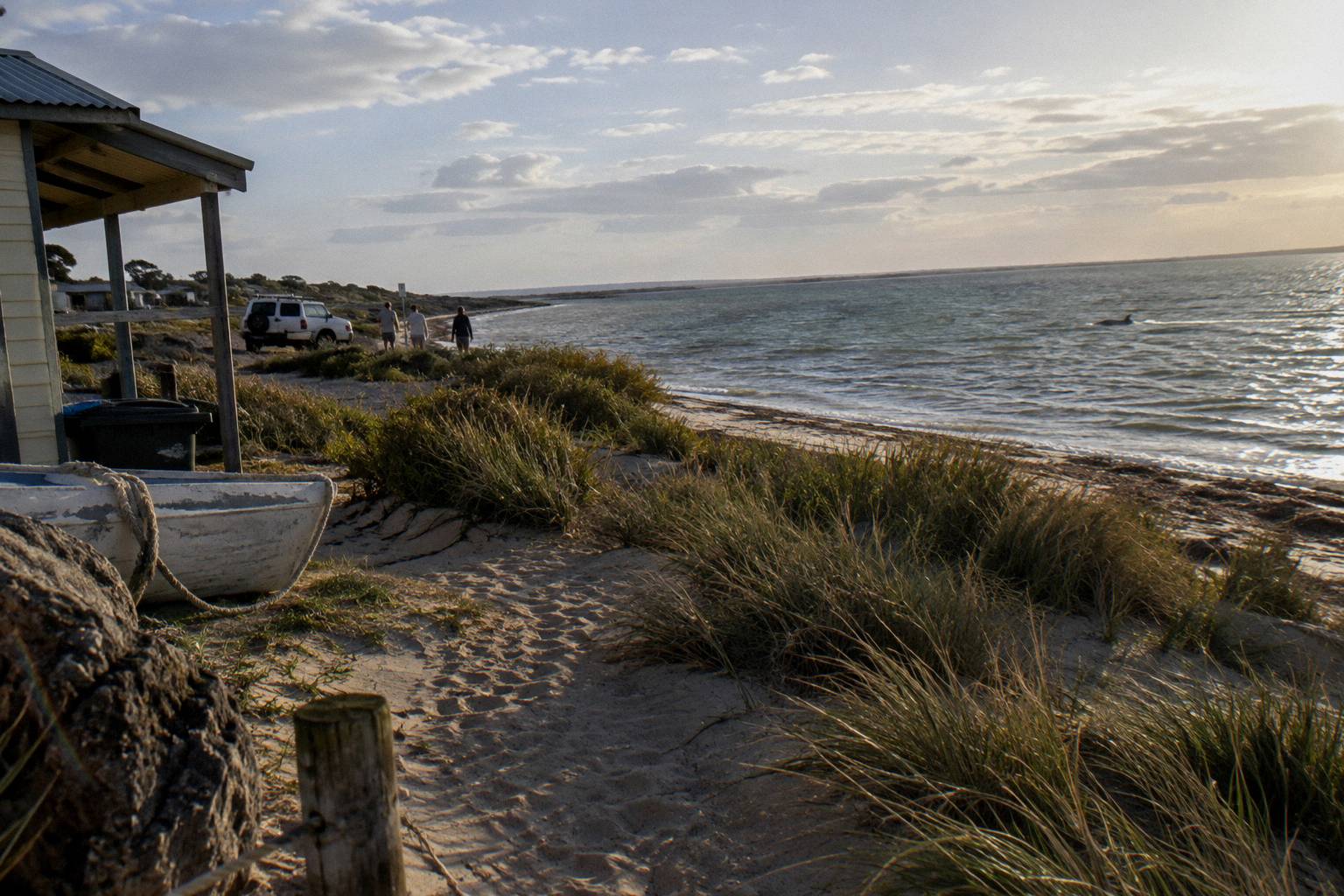
Bring the practical things the morning requires. Something to drink, shade for children, footwear that handles wet sand, and patience in quantities no packing list can supply. Under 6s enter free, and children old enough to stand quietly at the line get the most out of it, because the rangers' commentary is pitched at exactly that level of curiosity. Photography is welcome from the beach, with the obvious caveat that no flash and no intrusion into the interaction area applies, and the best pictures come from a modest distance anyway, where the bay and the light do half the work.
Set expectations honestly before you go, for yourself and for anyone travelling with you. The park's own language is cautious: visits depend on whether the dolphins come, times are not fixed, and the experience is managed for the animals' welfare first. Some mornings deliver several close passes, others deliver one distant fin and a good ranger talk. Both mornings were real Monkey Mia mornings, and planning for the second kind is what makes the first kind feel like the gift it is.
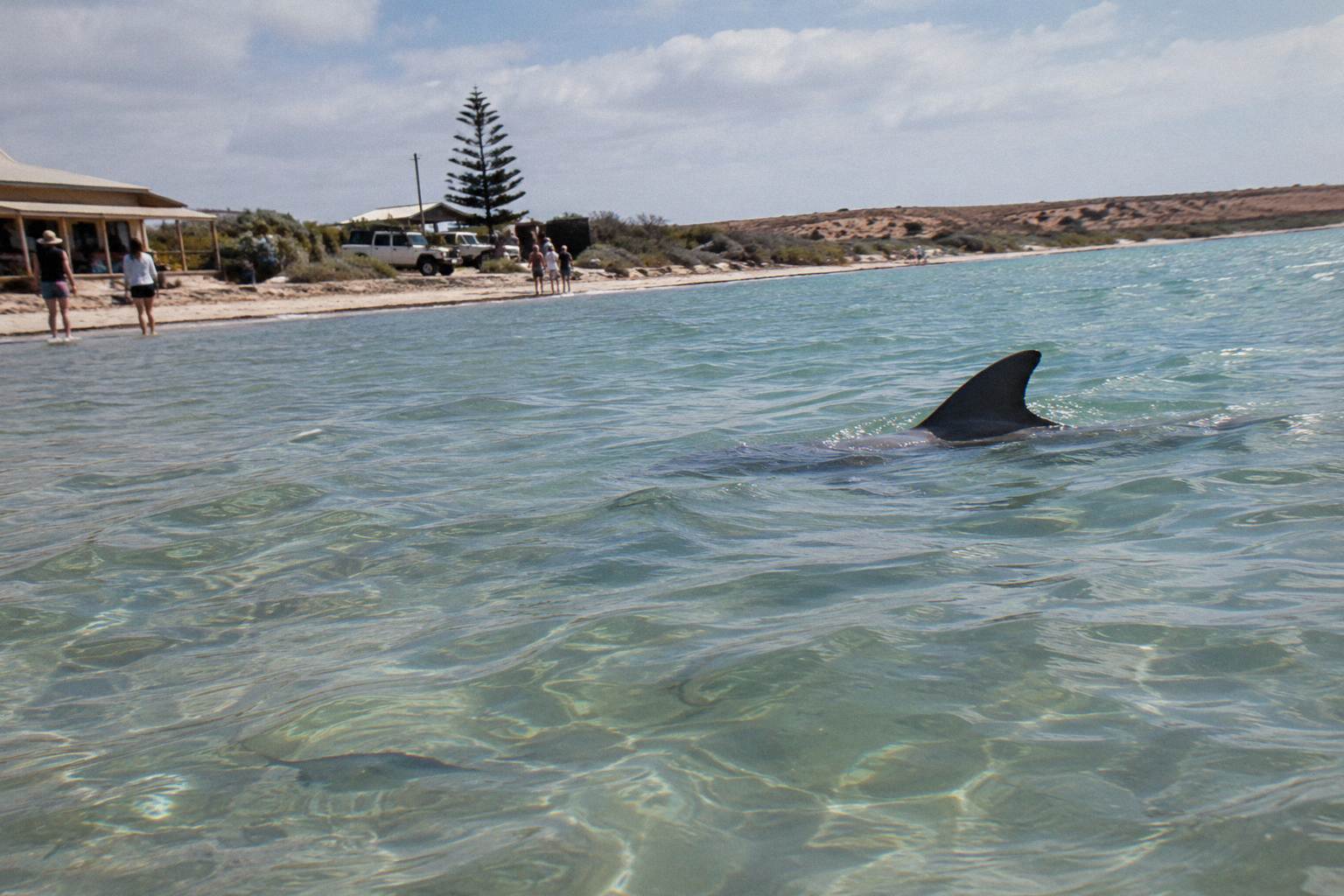
Common Questions About The Monkey Mia Dolphin Experience
Can Visitors Feed The Dolphins At Monkey Mia?
No. Only rangers feed the dolphins, up to three times daily, and visitors must never touch, approach or feed the animals. The rules are set by DBCA and are enforced on the beach.
What Time Does Dolphin Feeding Happen At Monkey Mia?
There is no fixed time. The official page says the timing of each experience depends on if and when the dolphins visit the beach, and visits are more frequent in the early morning, so plan an early, flexible start rather than a scheduled slot.
Is Monkey Mia Entry Covered By A WA Park Pass?
No. Monkey Mia Conservation Park charges its own per-person fee, and park passes and entry bought at other parks are not valid there. A 24-hour day permit is AU$15 per adult and AU$35 for a family; a 28-day month pass is AU$25 per adult.
Are Dolphin Sightings Guaranteed At Monkey Mia?
No sighting is guaranteed. The dolphins are wild and choose whether to visit, and the program is managed so they stay that way. Early mornings are the most productive window, but the honest plan is one that works even if the dolphins stay away.
Do Multi-Day Tours From Perth Stop At Monkey Mia?
Several do. Six-day, 7-day, 8-day and 10-day itineraries between Perth and Exmouth or Broome name Shark Bay or Monkey Mia among their stops, from US$1,120 per person for the 6-day Pinnacles And Shark Bay tour. Most fares include the Monkey Mia dolphin experience, so confirm your tour's inclusions when booking.
Can You Touch The Dolphins At Monkey Mia?
Never. Touching or approaching the dolphins is banned, no boating is allowed in the interaction area, and a five-knot zone applies near the jetty. The rangers manage every interaction, and compliance protects the program.