Best Time For A Ningaloo Reef Trip: Month By Month
Whale sharks, humpbacks, heat and cyclone season all pull the calendar in different directions along the Ningaloo Coast. The official season statements and the Bureau of Meteorology averages, read together, give a clear answer for every month.
Short answer
The core whale shark window is typically March to July, with sightings often into August and later, and the humpback swim season runs August to October. Cyclone season runs 1 November to 30 April. For cooler weather, the Learmonth averages favour May to October, when mean maximums sit between 24.5 and 33.4 degrees.
Timing is the single biggest lever on a Ningaloo Reef trip. The reef itself does not close, but the wildlife windows around it open and shut on their own schedules: whale sharks typically March to July, humpbacks present in the marine park June to November, a swim season for humpbacks of August to October, and an official cyclone season stretching from 1 November to 30 April. Heat matters too. The Bureau of Meteorology's Learmonth Airport averages put January's mean maximum at 38.1 °C and July's at 24.5 °C, a gap wide enough to change what a day on the water feels like.
This guide works through those windows month by month, using only the official season statements and the Bureau's climate table, then matches them against the multi-day tours that run the Perth to Exmouth route, including the 6-day one-way Coral Coaster, rated 4.8 across 55 reviews, from US$1,326 per person.
When Is The Best Time To Visit Ningaloo Reef?
The best time to visit Ningaloo Reef for a whale shark swim is typically March to July, when DBCA-licensed tours run and Australia's Coral Coast says the sharks are most reliably seen. For humpbacks the answer depends on what you want: the marine park page has them June to November, shore watching runs May to October, and the swim season runs August to October.
Those three humpback figures measure three different things, and keeping them separate is half the planning job. The other half is weather. The Learmonth averages show the wettest months are June at 42.9 mm, March at 42.5 mm and May at 40.8 mm, while October, at 1.4 mm, and November, at 1.8 mm, are the driest. Rain at Ningaloo is low and erratic from year to year, so those numbers describe averages rather than a reliable pattern, but they help set expectations.
One honest caveat sits over everything: no sighting of any animal is guaranteed, in any month. The official sources themselves say so. Australia's Coral Coast states plainly that there is no guarantee of whale shark encounters outside the main season, and the Monkey Mia dolphin page, for anyone building Shark Bay into the same trip, says dolphin experiences depend entirely on if and when the dolphins visit the beach. Plan around the windows, book inside them, and treat any encounter as the bonus the official pages describe it as.
Whale Shark Season At Ningaloo Reef
The official sources do not agree on a single end date, and each figure covers something slightly different. DBCA's whale shark management page says the sharks come between March and July each year. The Ningaloo Marine Park page says between March and August. Australia's Coral Coast, whose whale shark season page carries the most detail, says tours run March through to the end of June in Coral Bay and to August in Exmouth, that sightings often continue until October, and that the sharks are most reliably seen from March to July. Rather than a contradiction, this is three bodies describing the same drifting season from different angles.
Two practical consequences follow. First, where you base the swim matters if you are travelling late: a Coral Bay tour in July is outside that town's stated tour window, while an Exmouth tour is not. Second, the shoulder is real but soft. The early-November encounters of 2024 and 2025 happened, and they were late. Anyone booking October or November for whale sharks should read the booking page's cancellation and refund terms first, because the official wording offers no guarantee outside March to July.
The swim itself is tightly regulated, which shapes what a booking actually buys. Under DBCA's whale shark management rules, only licensed operators may run commercial tours, vessels stay at least 30 m from the shark inside a 250 m approach zone, a maximum of 10 swimmers is in the water at a time, swimmers stay 3 m from the head or body and 4 m from the tail, no flash or extension-pole cameras are allowed, no motorised aids, no SCUBA, and the swim is capped at 60 minutes. A total of 41,390 people swam with whale sharks at Ningaloo in 2025.
The multi-day road tours do not automatically include the swim; several list it as an optional activity you can purchase, so confirm what is included when booking. Three of them make the timing question concrete:
The 6-day one-way Coral Coaster and the 7-day Exmouth Explorer both reach Exmouth and Ningaloo with time to add a licensed swim as a separate booking, and the 8-day small-group boutique tour does the same route with two extra days of slack, which matters if a weather day interrupts a March or April departure.
Humpback Whales: Three Official Windows, Not One
Three official figures apply to humpbacks and they measure different things, so they never merge into one season. The Cape Range National Park page puts the annual migration, for shore watching, at May to October. The Ningaloo Marine Park page says humpbacks are present June to November. Australia's Coral Coast gives the in-water swim season as August to October.
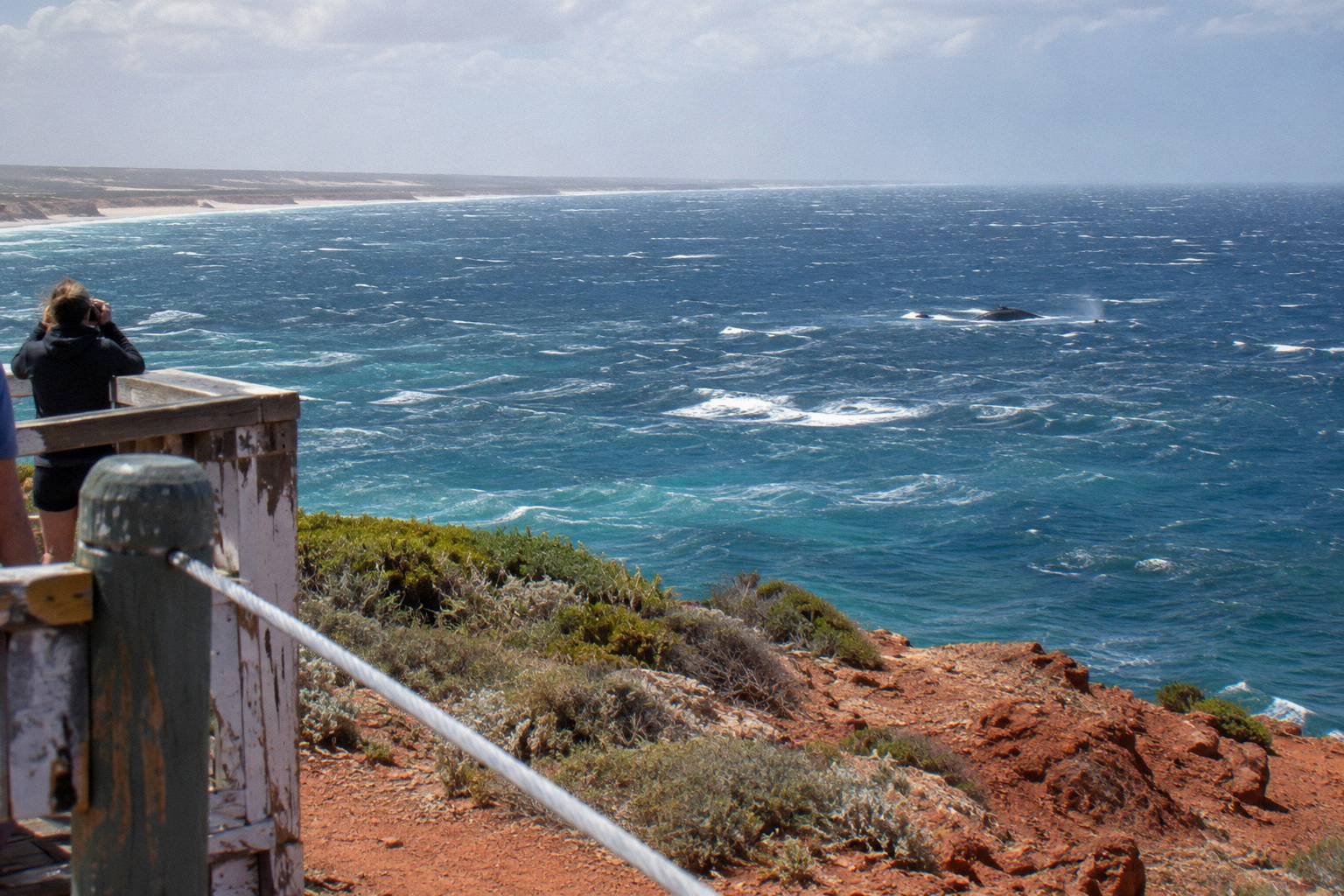
The distinction changes what each month offers. A traveller in June wants the answer from the marine park page: humpbacks are present, so a boat trip has whales to look for, but the swim season has not opened. A traveller in late October faces the opposite: shore watching, at five months and running to the end of October, is closing, the swim season closed at the end of October, yet the marine park page still has humpbacks present through November. November, in other words, is not an empty month for whales, even though every in-water humpback season has ended.
| Source | What the figure covers | Window |
|---|---|---|
| Cape Range National Park page | Shore watching during the annual migration | May to October |
| Ningaloo Marine Park page | Humpbacks present in the marine park | June to November |
| Australia's Coral Coast | Humpback swim season | August to October |
For anyone combining whales with whale sharks, the overlap is the sweet spot. August sits inside the Exmouth whale shark tour window, inside the marine park's humpback presence window, and inside the humpback swim season all at once. That overlap is why August, rather than the cooler June and July months, is the month a wildlife-first itinerary squeezes everything from, accepting 26.6 °C mean maximums and 11.8 mm of average rain to get it.
If whales are the priority and heat is a concern, the June to November presence window starts in the two coolest months in the averages, June at a mean maximum of 24.9 °C and July at 24.5 °C, with mean minimums of 13.2 °C and 11.4 °C. The choice between August's overlap and July's cool is the real one, and it is worth settling before dates are picked.
The Month By Month Calendar For A Ningaloo Trip
Two reference sets drive the calendar: the Bureau of Meteorology's Learmonth Airport averages for heat and rain, and the official season statements for whale sharks and humpbacks. The wettest months in the averages are June, March and May; the driest are October, November and September. Heat peaks in January at a mean maximum of 38.1 °C and bottoms out in July at 24.5 °C.
The table below crosses the Bureau's Learmonth Airport climate table with the wildlife windows. Whale shark cells follow the Australia's Coral Coast season wording; humpback cells follow the Ningaloo Marine Park page. Every cell is a fact from an official source, and none of it is a promise.
| Month | Mean max (°C) | Mean rain (mm) | Whale sharks | Humpbacks (marine park) |
|---|---|---|---|---|
| January | 38.1 | 29.2 | Outside the stated season | Not in window |
| February | 37.6 | 38.1 | Outside the stated season | Not in window |
| March | 36.6 | 42.5 | Core season begins | Not yet present |
| April | 33.4 | 19.1 | Core season | Not yet present |
| May | 28.7 | 40.8 | Core season | Not yet present; shore watching begins |
| June | 24.9 | 42.9 | Core season; Coral Bay tours end | Present |
| July | 24.5 | 20.4 | Core season | Present |
| August | 26.6 | 11.8 | Exmouth tours end; sightings often continue | Present; swim season runs this month to October |
| September | 29.7 | 2.4 | Sightings sometimes continue; no guarantee | Present; swim season |
| October | 33.0 | 1.4 | Sightings sometimes continue; no guarantee | Present; swim season ends |
| November | 34.6 | 1.8 | Encounters as late as early November in 2024 and 2025 | Present; all swim seasons ended |
| December | 37.1 | 5.6 | Outside the stated season | Not in window |
Read as a whole, the calendar shows why June and July anchor so many itineraries: the two coolest months, the heart of the whale shark season, and the start of humpback presence line up. March delivers the sharks but at 36.6 °C mean maximums. October and November are the driest months in the averages, at 1.4 mm and 1.8 mm, with humpbacks still present in November even though every in-water whale season has closed. For more on the town end of the trip, the best months for an Exmouth visit breaks the same decision down from the town's side.
One seasonal extra belongs to the road, not the reef. The Nambung National Park page, covering the Pinnacles on the drive north, says the park bursts into flower from August to October. That is the only wildflower statement any official source gives on this route, and it applies to the Pinnacles alone. A September or October departure catches it on day one.
Heat, Rain And The Learmonth Averages
The Learmonth averages show mean maximums of 38.1 °C in January and 37.6 °C in February, against 24.5 °C in July and 24.9 °C in June. Mean minimums fall to 11.4 °C in July and 13.2 °C in June. Annual rainfall averages just 249.1 mm, and the Bureau describes it as low and erratic from year to year.
Three points in those numbers matter for planning. The summer plateau, 38.1, 37.6, 36.6 and 37.1 °C from January to March and December, means a summer trip is a heat-managed trip. The winter trough, 24.9 and 24.5 °C in June and July, is mild by day and genuinely cool by night at 13.2 and 11.4 °C minimums, so packing for a July reef trip is not the same exercise as packing for a tropical beach. And the rainfall column is a poor month-picker on its own, because the totals are small and the Bureau's own note is that rainfall is low and erratic from year to year. June's 42.9 mm average makes it the wettest month in the table while remaining, in absolute terms, dry by most standards.
The averages describe the Exmouth area around Learmonth Airport, not the water, and the climate table carries no sea temperature, no hours of sun and nothing about Perth's weather at the other end of the drive. Anyone extending the planning to the whole route should start from how the Ningaloo trip length decision works and build the season choice into it, rather than picking dates first and fitting days around them.
Cyclone Season And Cyclone Narelle
The official cyclone season runs 1 November to 30 April, and the Bureau of Meteorology describes the north-west coast between Broome and Exmouth as Australia's most cyclone-prone area. Cyclones can occur outside those months. Any departure date inside that window carries some cyclone risk, so flexible plans and live alerts matter more than any month-by-month rule.
Severe Tropical Cyclone Narelle reached Category 5 strength and crossed the coast south of Coral Bay in March 2026. The Bureau's tropical season summary records the storm reaching Category 5 strength, and the coast crossing south of Coral Bay is recorded as a separate fact. What that means for a trip is practical, not dramatic: March 2026 showed that a core whale shark month can also be a cyclone month, which is exactly what the 1 November to 30 April season dates say on paper.
In April 2026, DBCA reported that Cape Range and Nyinggulu campgrounds had reopened on 27 April with exceptions, that campgrounds in Nyinggulara National Park, formerly Ningaloo, needed complete rebuilding with no estimated reopening time, and that the Ningaloo Coast and Exmouth region was open for visitors. That was an April statement, true on its April date, and it is not a statement about conditions today. Before any trip, the live source is the DBCA alerts page, and second to it the tour's own booking page.
The insurance against all of this is partly in the dates and partly in the structure of the booking. A trip inside the cyclone window deserves a careful read of the operator's terms for weather disruptions, and the Bureau's own severe weather season guidance is the reference for what the season is and is not. What no source supports is a promise that any particular month is cyclone-free.
Turquoise Bay And In-Water Safety By Season
Turquoise Bay sits in Cape Range National Park, and the DBCA page warns that dangerous currents can occur there. A natural current flows south to north along the Drift Loop, and the page advises inexperienced swimmers not to swim or snorkel in strong currents and to seek the services of a licensed tour operator instead.
“Exmouth was amazing Swimming with the sharks and turtles Guide was really friendly and knowledgeable Awesome trip”
The official wording on the Turquoise Bay page is specific about how to reduce the risk: the best snorkelling is accessed via the Bay Loop parking, well away from the potentially strong currents found at the sandy point, and the Drift Loop works with, not against, the natural current that flows from south to north. No tide times and no calendar of safe conditions exist in the official facts, so nothing here can promise a calm day in any month. What the page does establish is that the hazard is a current hazard, present whenever conditions produce strong currents, and that licensed operators are the stated fallback for inexperienced swimmers.
This connects to season choice in one direction only. The climate table says nothing about currents, and no source states that any month is safer than another at Turquoise Bay. What a seasonal reader can take is the structural point: a trip built around a multi-day tour puts a licensed operator between the swimmer and the water for the headline experiences, and independent snorkelling at spots like Turquoise Bay is the part to approach on the official page's own terms. The Turquoise Bay snorkelling guide covers the site in full.
“The whole week was fantastic from start to finish. Our guide Brianna made the trip for us outstanding. Funny, knowledgeable, a great driver, were just some of her attributes. Maybe some of the accommodation could be tweaked a little but overall a five star experience”
Matching Tours To The Season You Choose
The multi-day tours running the Perth to Exmouth route follow the itineraries listed for them, and you should confirm seasonal departure dates when booking, so timing is a decision about wildlife windows and heat as much as tour availability. From-prices range from US$1,120 per person on the 6-day Pinnacles and Shark Bay tour to US$2,899 per person on the 8-day small-group boutique tour.
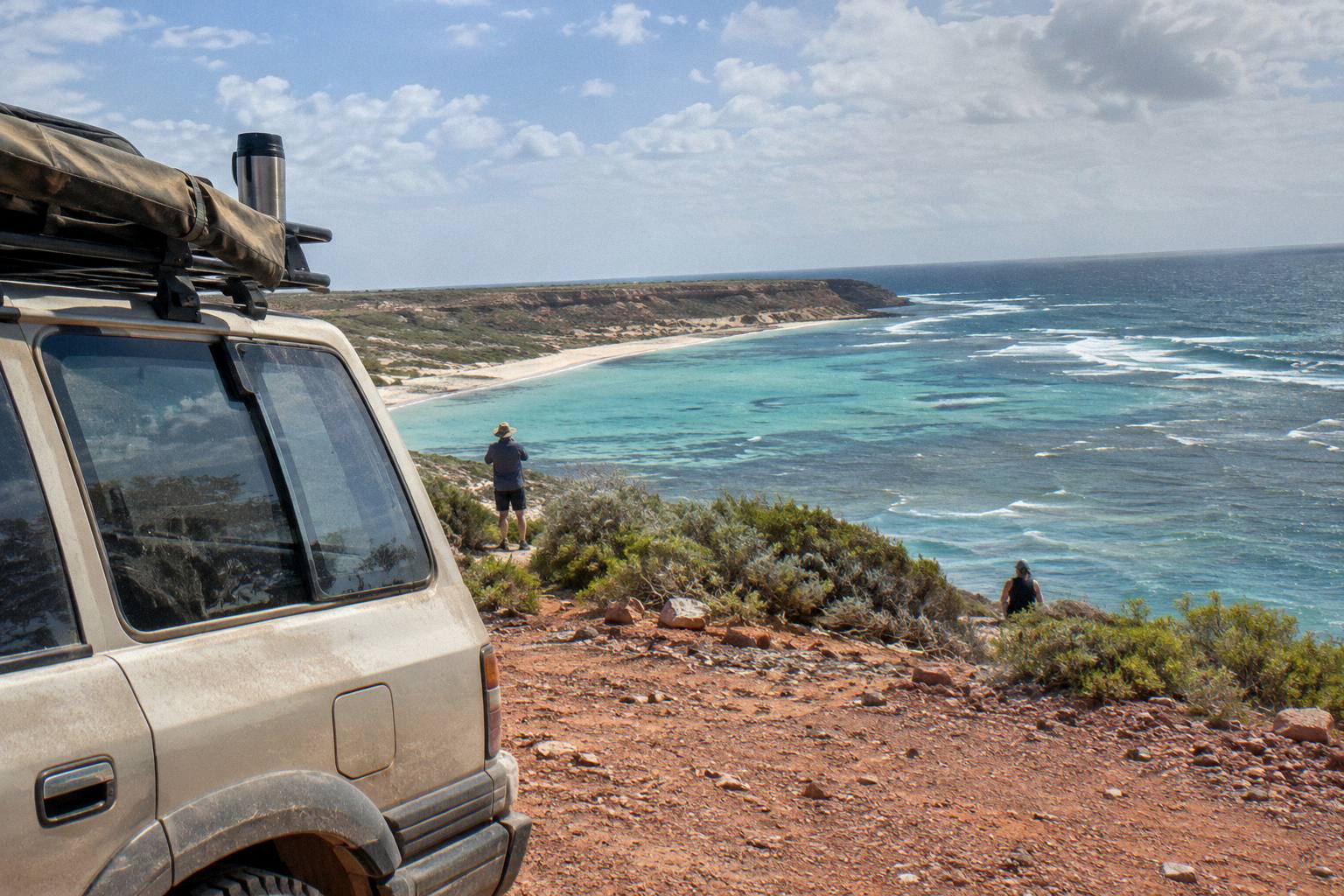
Because prices are from-prices that vary with date and group, the month you pick can move the price as much as the itinerary does. The honest comparison is not which tour is cheapest on paper but which structure fits the season. A six-day one-way trip in August has less slack than an eight-day one if a weather day eats the Exmouth end, while a return loop buys a second pass at the coast on the way south. The full month-by-month detail on the whale shark tour options from Perth works through that trade-off for the swim-focused traveller.
Start with the featured option: the 6-day one-way Coral Coaster, rated 4.8 across 55 reviews, from US$1,326 per person, runs Perth to Exmouth through the Pinnacles, Kalbarri, Shark Bay and Monkey Mia, Coral Bay and Exmouth and Ningaloo. As a season vehicle it lands you in Exmouth with Ningaloo days already in the itinerary, which is the structure an August overlap trip wants, and it can be compared directly on its tour page or through the operator's live listing: the 6-day one-way Coral Coaster, Check availability. Planning the same route end to end is easier with Perth To Exmouth Tour as the working reference for the whole corridor.
“A fantastic trip along the coast of WA. Sure there is a lot of driving but there are great rewards a Long the Way. Day 4 and 5 on the sea is amazing. There were great coral Fish, Sharks, Mantareys, turtles and whaleshark. Lots of big memories for life. A great Way to travel and with good community and in parts of WA that are really special.”
For a cooler-months choice with a different structure, the 6-day Perth to Exmouth with Monkey Mia from US$1,120 per person covers the same headline stops on a tighter budget, which frees room in a June or July plan for a separately booked licensed whale shark swim. No rating is shown for it.
Travellers who want the return built in, so that a missed day north can be caught south, can look at the 7-day Perth to Exmouth and return with Monkey Mia, from US$1,256 per person. It loops back to Perth through the Pinnacles, Kalbarri, Shark Bay and Monkey Mia, Coral Bay and Exmouth and Ningaloo, giving the reef two chances inside one booking.
Another return-loop option suits the dry-season months especially well. The 7-day Kalbarri coastal adventure, from US$1,205 per person, runs the Pinnacles, Kalbarri, Shark Bay and Monkey Mia, Ningaloo and Exmouth and back to Perth, and its Kalbarri weight makes it a natural fit for a September or October departure, when the driest months in the averages, 2.4, 1.4 and 1.8 mm of rain, line up with coastal lookouts and gorges rather than whale swims. No rating is shown for it.
| Tour | Days | Direction | From price (per person) | Rating |
|---|---|---|---|---|
| 6-day one-way Coral Coaster | 6 | Perth to Exmouth | from US$1,326 | 4.8 across 55 reviews |
| 7-day Exmouth Explorer | 7 | Return loop | from US$1,385 | 4.9 across 345 reviews |
| 8-day small-group boutique tour | 8 | Perth to Exmouth | from US$2,899 | No rating shown |
| 6-day Perth to Exmouth with Monkey Mia | 6 | Perth to Exmouth | from US$1,120 | No rating shown |
| 7-day Kalbarri coastal adventure | 7 | Return loop | from US$1,205 | No rating shown |
Common Mistakes When Timing A Ningaloo Trip
The mistakes that cost people trips are merging the three humpback windows into one, treating a late whale shark encounter as the season, ignoring the 1 November to 30 April cyclone window because a month looks dry, and assuming a multi-day tour includes the whale shark swim. Each one comes from reading a single official figure and skipping the others.
The merged-humpback mistake is the most common. Someone reads August to October, the swim season, and concludes November is whale-free, when the Ningaloo Marine Park page has humpbacks present to November. Someone else reads June to November and books a July swim, when the swim season has not opened. The three figures answer three different questions: are they there, can I watch from shore, and can I get in the water.
The second mistake is trusting the outlier. Exmouth had whale shark encounters as late as early November in 2024 and 2025, and that is a real, sourced fact, but Australia's Coral Coast pairs it with the words no guarantee outside the main season. Booking November for whale sharks is a bet against the stated odds, and it should be made knowing the booking page's terms, not the headline.
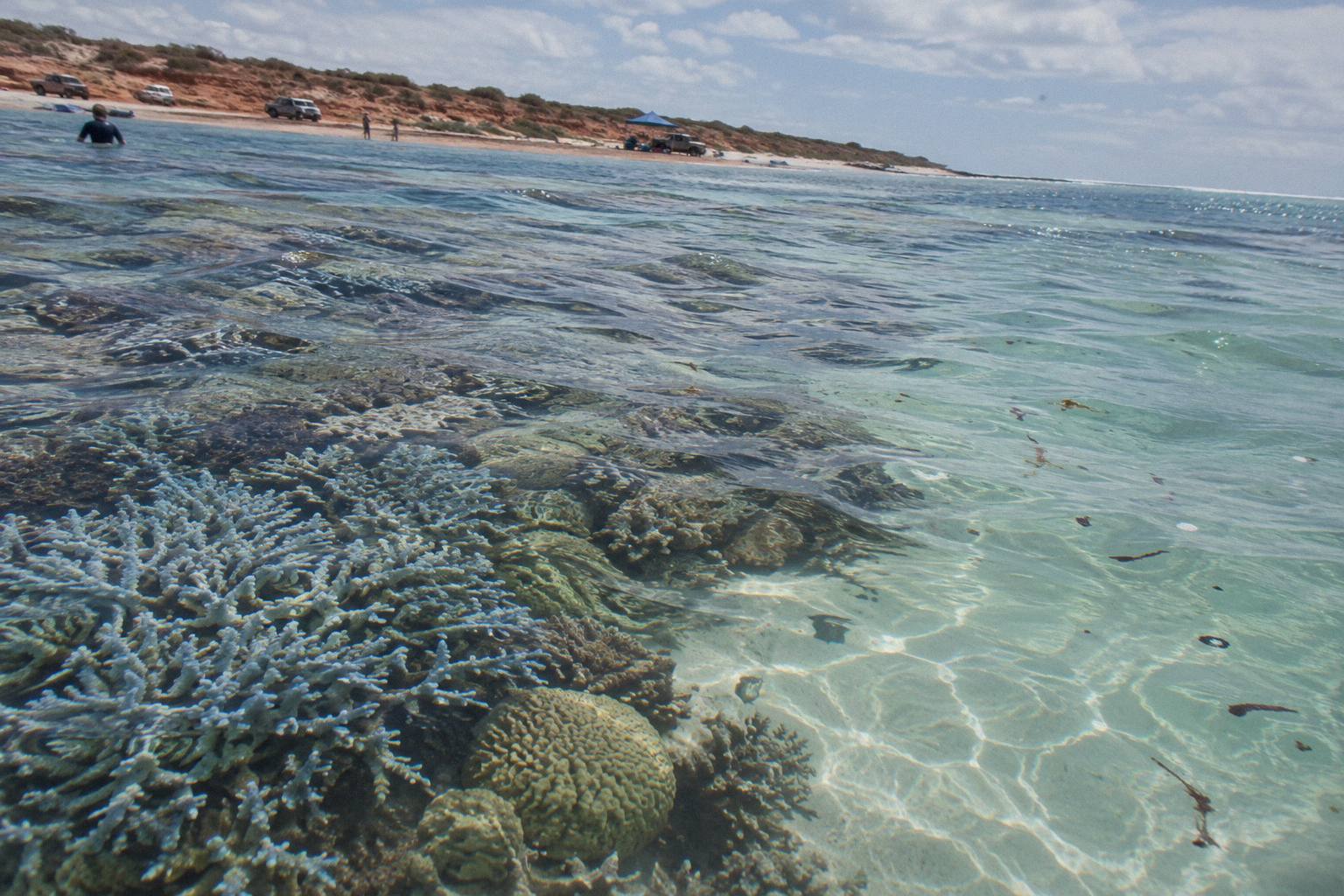
The third is seasonal overconfidence. October's 1.4 mm average rain makes it look like a safe-harbour month, but the cyclone season runs to 30 April, cyclones can occur outside the season, and the Bureau calls this coast Australia's most cyclone-prone area between Broome and Exmouth. Dry averages and cyclone risk are different things, and only the live alerts page answers what is happening now.
Common Questions About A Ningaloo Reef Trip
What Is The Best Month To See Whale Sharks At Ningaloo?
Typically March to July, with sightings often into August and later. Australia's Coral Coast says tours run March to the end of June in Coral Bay and to August in Exmouth, and that the sharks are most reliably seen from March to July. Encounters happened as late as early November in 2024 and 2025, but there is no guarantee outside the main season.
When Can You Swim With Humpback Whales At Ningaloo?
The humpback swim season runs August to October, per Australia's Coral Coast. That is narrower than the whales' presence: the Ningaloo Marine Park page has humpbacks June to November, and the Cape Range National Park page puts shore watching at May to October. Presence does not mean the swim is open.
When Is Cyclone Season At Exmouth?
The official cyclone season runs 1 November to 30 April, and the Bureau of Meteorology says cyclones can occur outside those months. The Bureau describes the north-west coast between Broome and Exmouth as Australia's most cyclone-prone area, so any date in the window deserves flexible plans and a watch on live alerts.
Did Cyclone Narelle Affect The Ningaloo Coast?
Severe Tropical Cyclone Narelle reached Category 5 strength and crossed the coast south of Coral Bay in March 2026. In April 2026 DBCA said Cape Range and Nyinggulu campgrounds had reopened on 27 April with exceptions, that campgrounds in Nyinggulara National Park needed complete rebuilding with no reopening date, and that the region was open for visitors. Check the DBCA alerts page for current conditions.
Is November Too Late For A Ningaloo Reef Trip?
For whale sharks, November is outside the main season, though encounters occurred as late as early November in 2024 and 2025, with no guarantee. For humpbacks, the Ningaloo Marine Park page still has them present through November, while the shore watching window and the swim season have both ended. November is warm, at a 34.6 °C mean maximum, and dry, at 1.8 mm average rain.
Is Turquoise Bay Safe To Snorkel In Every Month?
The DBCA page warns that dangerous currents can occur at Turquoise Bay at any time, and no month is stated as safer than another. The page advises snorkelling from the Bay Loop parking, away from the strong currents at the sandy point, and says inexperienced swimmers should not swim in strong currents and should use a licensed tour operator instead.